Visiting the dentist is not exactly most children’s favorite activity. But there’s a difference between not liking the dentist and being afraid of the dentist. If your child gets anxious during their appointments or has special needs, dental sedation and general anesthesia are both valid options for helping them have a more positive experience.
The option that’s right for your child depends on the nature of their symptoms – and your pediatric dentist’s recommendation! Keep reading to see which one your child might need.
Dental Sedation
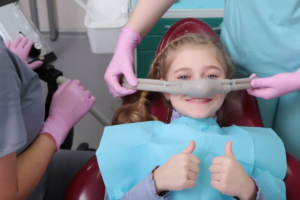
“Dental sedation” is an umbrella term for various types of sedatives. Some are taken orally via prescription pill, while some are administered intravenously. Nitrous oxide (a.k.a. “laughing gas”) is the most common, and involves inhaling the sedative through a low-profile nasal mask.
What all of these methods have in common, though, is that they do not induce unconsciousness. The main goal of dental sedation is to help children feel more relaxed and dull potentially bothersome sensations like bright lights and loud noises. It works well for children who:
- Have mild-to-moderate symptoms of anxiety
- Have sensory sensitivities
- Have trouble sitting still for extended periods of time
- Have a sensitive gag reflux
- Have special needs that make it difficult or uncomfortable to receive dental care
General Anesthesia
General anesthesia does induce unconsciousness. For all intents and purposes, your child will be asleep for the entire duration of their treatment. They’ll have no memory of their experience – it will be like they simply fell asleep and almost immediately woke back up. This option is best when:
- A child has severe symptoms of anxiety
- Needs to undergo a lengthy or complicated procedure
- Has special needs that make it virtually impossible for them to receive care otherwise
- Tried dental sedation in the past with little-to-no benefit
Talk to Your Pediatric Dentist
While you might have a pretty good idea of which option your child will need, it’s always best to talk to your pediatric dentist. It’s generally recommended to go with the mildest solution when possible, and as experts in their field, your pediatric dentist can help you find the balance between minimally invasive and effective. Describe your child’s situation is as much detail as possible when you meet with them for a consultation. They’ll make sure your child gets what they need in order to feel comfortable and safe!
About the Author
Dr. Ryne Paulson is a proud Diplomate on the American Board of Pediatric Dentistry and has been helping children smile brighter for over 10 years. Thanks to his experience, he’s able to provide nitrous oxide sedation in-office, and works closely with a licensed anesthesiologist to provide general anesthesia. If your child is afraid of the dentist or finds dental treatments uncomfortable, contact Dr. Paulson’s office at 307-266-1997 to schedule a consultation.